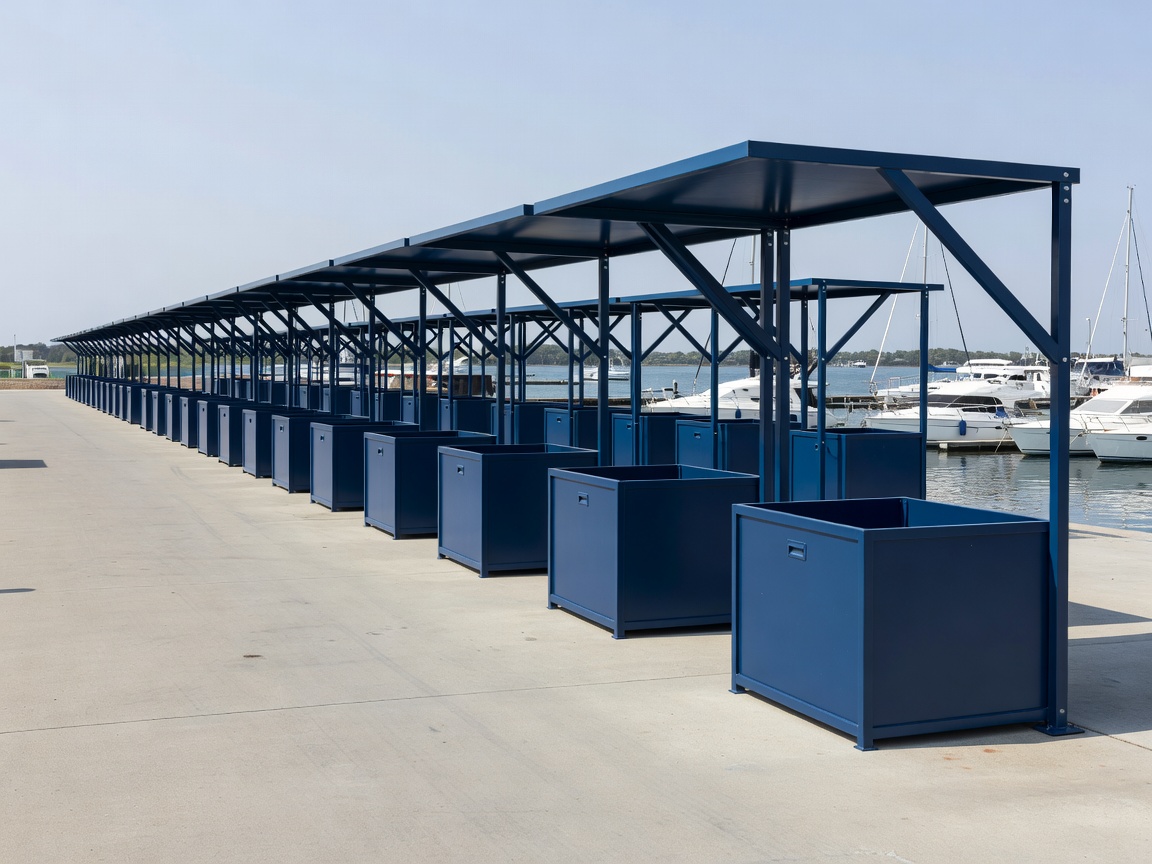
Start with collection-point planning
A collection point should be easy to reach, easy to identify and suitable for the materials assigned to it. The best position is not always the closest point to the water. It may need to support vehicle access, pedestrian safety, staff visibility and separation from workshop activity.
Map the marina before selecting containers. Note pontoons, gates, ramps, service roads, fuel areas, workshops, wash-down spaces and restricted zones. Record which users create each stream. This creates a practical basis for positioning and service coordination.
Layout changes the operating model
A small marina may use a limited number of central points. A larger harbour may need several zones with different access rules. Seasonal operations require a plan that can respond to visitor activity without creating unnecessary container movement. A boatyard connected to a marina usually needs separate routes for workshop waste and general visitor waste.
Container positioning should protect access and preserve clear working space. Storage areas need sufficient capacity for the planned service arrangement, but capacity alone does not solve poor identification or unsuitable placement. Review visibility, lighting, weather exposure and the route used by collection personnel.
Frequency, scheduling and communication
Collection timing should reflect observed activity, local requirements, available access and the characteristics of each stream. It should not be based on a generic calendar. Record exceptional events, seasonal peaks and changes in berth occupancy. Share the operating plan with marina staff, contractors and relevant users.
Clear communication reduces abandoned bags, mixed materials and blocked access. Use consistent names for points and zones. Include a simple escalation route for full containers, damaged equipment or unidentified waste.
Small facilities, large facilities and boatyards
Small facilities often benefit from a compact route and visible central control. Larger facilities need zone ownership, route maps and coordination between teams. Seasonal marinas need review points before and during busy periods. Boatyards require stronger separation because maintenance work creates packaging, workshop and special waste alongside normal marina waste.
Advantages and limitations
A mapped system improves visibility, access planning and accountability. It can also reveal duplicated points or long internal routes. The limitation is that a map becomes outdated when berths, tenants, works areas or access rules change. Schedule regular operational reviews.
Short checklist
- Map docks, roads, gates and work areas.
- Assign each collection point a clear purpose.
- Check access, visibility and storage conditions.
- Document seasonal and exceptional requirements.
- Give staff a simple escalation process.
Related topics
Marina Recycling Systems · Environmental Planning · Boatyard Waste