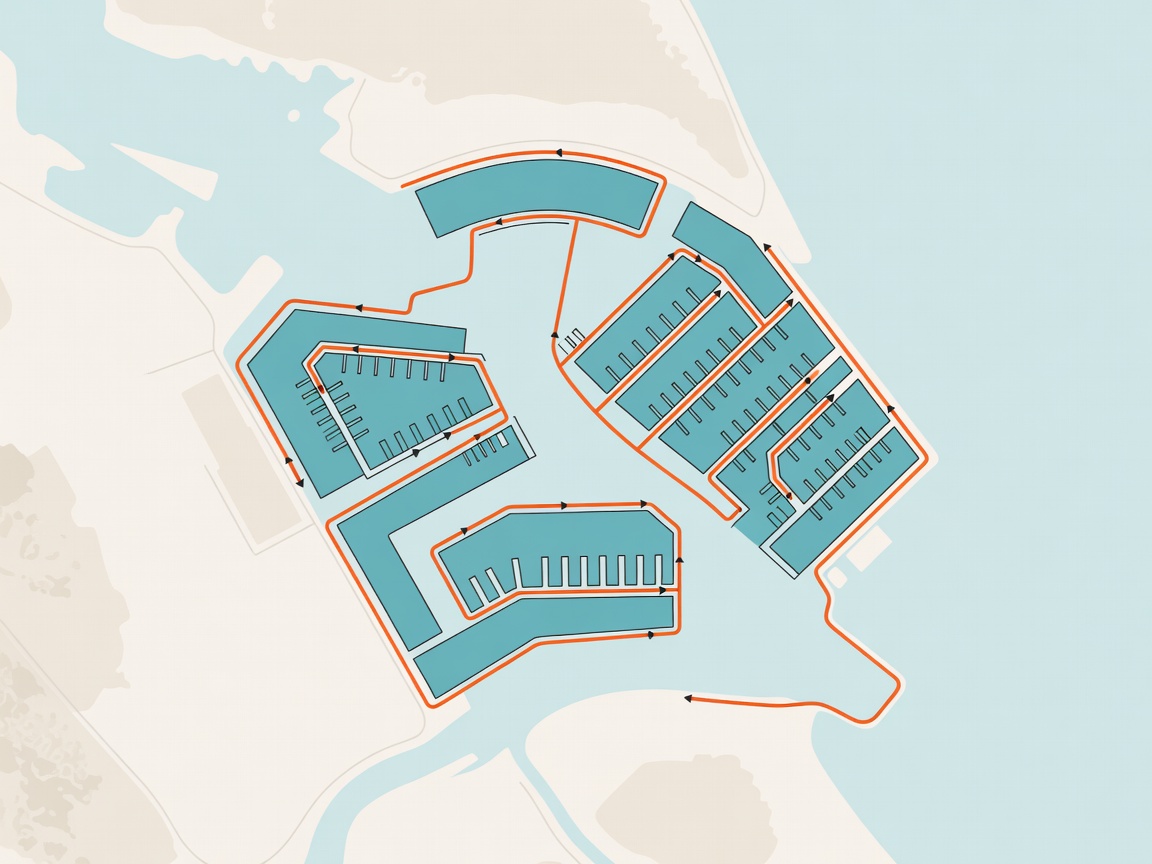
Map the waste system
Planning begins with a site map. Include berths, pontoons, gates, roads, workshops, storage, visitor facilities, service areas and restricted zones. Add the waste streams created in each area and the people responsible for each decision.
A useful map is operational rather than decorative. It should help a team decide where material goes, who checks a point, how a collection vehicle reaches it and what happens when conditions change.
Connect points to people
Assign responsibilities by function. One person may maintain signage, another may check storage, while a manager coordinates authorized collection. Define who records issues and who approves changes. Avoid responsibility statements that do not include a practical action.
Communication should reach staff, contractors and relevant marina users. Short instructions at collection points are supported by a fuller internal procedure. Review language when layout, services or waste categories change.
Seasonal planning and scheduling
Seasonal work can alter berth activity, workshop demand, access and storage needs. Review the plan before a busy operating period and again after significant changes. Use observed issues to adjust locations, checks or communications. Do not assume that last season’s arrangement remains suitable.
Service scheduling should consider access windows, site events, weather exposure, contractor requirements and the characteristics of each stream. The schedule is one part of the system, not a replacement for monitoring.
Records and continuous improvement
Keep practical records: map revision date, inspection notes, reported problems, changes made and responsible person. Review recurring issues rather than treating each one as isolated. A repeated overflow, unclear sign or blocked route may indicate a planning problem.
Improvement should be controlled. Test a change, document the result and update the operating information. Avoid claiming environmental performance outcomes unless they have been properly measured and supported.
Comparisons, advantages and limits
A single integrated plan improves consistency across collection, recycling and special waste. Separate departmental plans can be more detailed but may create gaps at the boundaries. Integrated planning requires coordination and review time. It is not a substitute for legal advice or site-specific technical assessment.
Short checklist
- Map physical zones and waste streams.
- Assign named operational responsibilities.
- Review seasonal access and activity.
- Keep records with revision dates.
- Turn recurring issues into improvement actions.