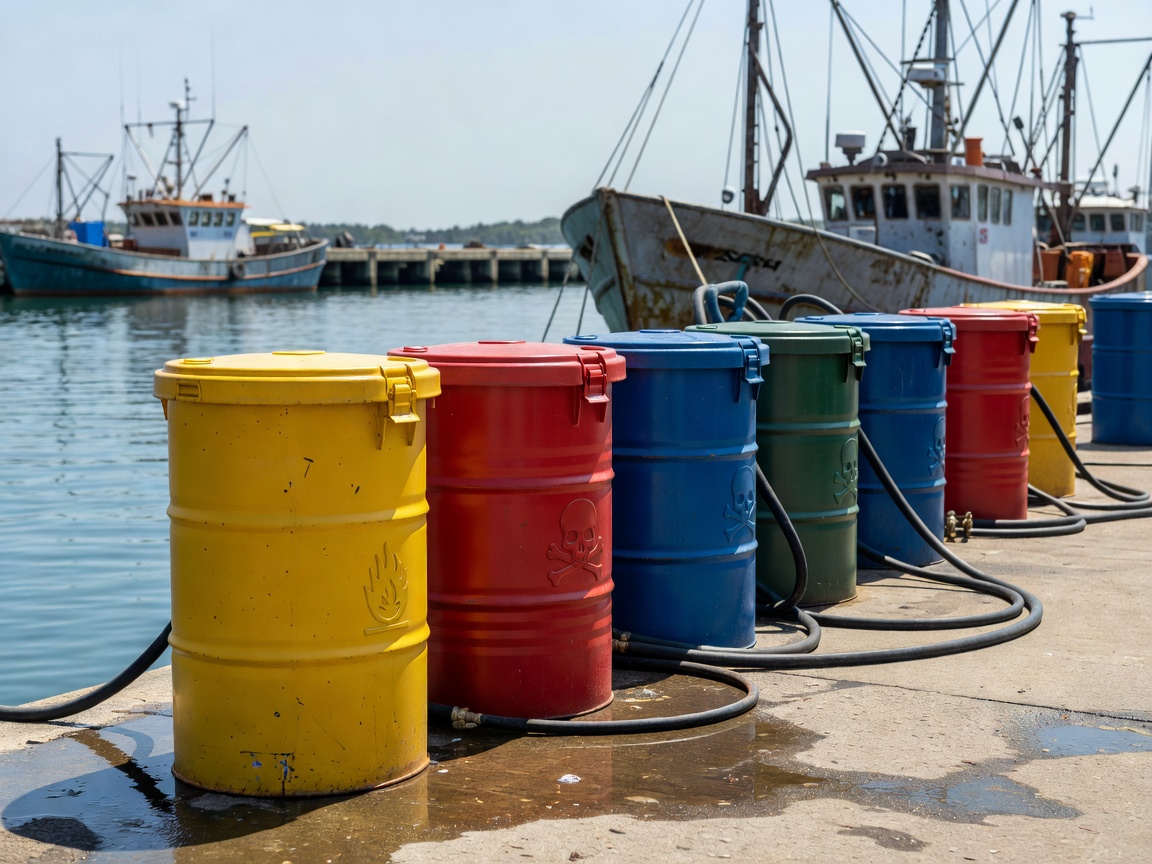
Identify before moving
Special waste planning starts with knowing what may be present. Review maintenance activities, products used on site, contractor work and existing records. Categories can include batteries, oils, contaminated absorbent materials, chemical containers and other maintenance-related or regulated waste.
Do not guess the classification of an unknown material. Isolate the issue from normal waste decisions and refer it to trained personnel or an authorized adviser. Labels, product information and local requirements may affect the correct route.
Segregation and approved containers
Separate special categories from general and recyclable streams. Use containers and labels suitable for the material and the applicable requirement. The correct container depends on the waste type, condition, quantity, storage context and authorized collector. Do not transfer, combine, neutralize or improvise materials based on this website.
Site plans should identify controlled areas without publishing sensitive operational details. Access should be limited to appropriate personnel. Inspect labels and condition through an established procedure, and escalate damage, leaks or uncertainty immediately.
Authorized collection and documentation
Use authorized collection routes that meet applicable local and national environmental requirements. Confirm the required documentation before arranging service. Records may include the category, source area, date, responsible person, collection reference and supporting documents.
Keep documentation accessible to the responsible site team. A record should help answer what was identified, who coordinated it and which route was used. It should not replace professional advice or regulatory checks.
Comparing centralized and local control
A centralized controlled area can improve supervision and documentation. Local points may reduce internal movement but require more inspections and clearer boundaries. The appropriate model depends on site layout, work activities, access and legal requirements.
Advantages and limitations
Strong identification reduces accidental mixing and improves accountability. It cannot remove the need for qualified assessment. Rules vary by jurisdiction and material. Always follow current local requirements, safety procedures and instructions from authorized handlers.
Short checklist
- List likely special and regulated categories.
- Define an escalation route for unknown materials.
- Use approved containers and labels.
- Restrict access to trained personnel.
- Keep collection and classification records.